Quick answer
Prove the base source before upgrading it. Community observations report one Duck every five seconds (12/min) at base and one every two seconds (30/min) after the speed upgrade. Treat those as observed rates, not guaranteed constants for every patch.
v1.0.7 animation fix
The official patch fixes the automatic Duck Workbench animation stopping. A frozen animation and a stopped output are different failures: first watch whether new Ducks still appear and move. Use cleanup or rebuild steps only when the product flow itself has stopped. The patch note does not change the community-observed 12/min and 30/min rates below.
Baseline layout
Automated Duck Workbench → short straight lane → staged Fans → local side walls → wide catcher → Maw. Give every Fan one job: clear the source, carry through one real dead zone, or correct the final approach. Do not ask one Fan to launch across the whole room.
Upgrade after a clearance test
- Run the current rate for at least 20 products.
- Mark the first place where the pile grows.
- Remove physical obstructions before buying force.
- Add a roof only where Ducks visibly escape upward.
- Increase source speed only when entrance and catcher both clear themselves.
Stop spending when
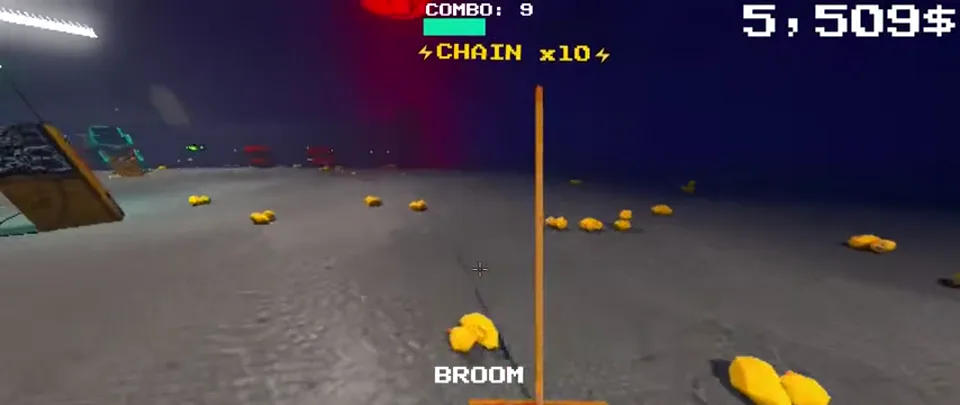
- the source does not develop a growing pile;
- the same section no longer throws Ducks out;
- the catcher handles the current rate;
- the line runs while you work elsewhere.
Then move money to Cash Registers. Add Bumpers for combo experiments only after the direct route is stable; use the Magnet for recovery rather than as the main conveyor.
Sources and evidence
The animation fix comes from the official v1.0.7 Steam announcement. The observed rate also appears in the community Duck automation guide and the attributed video. Rates remain community observations.